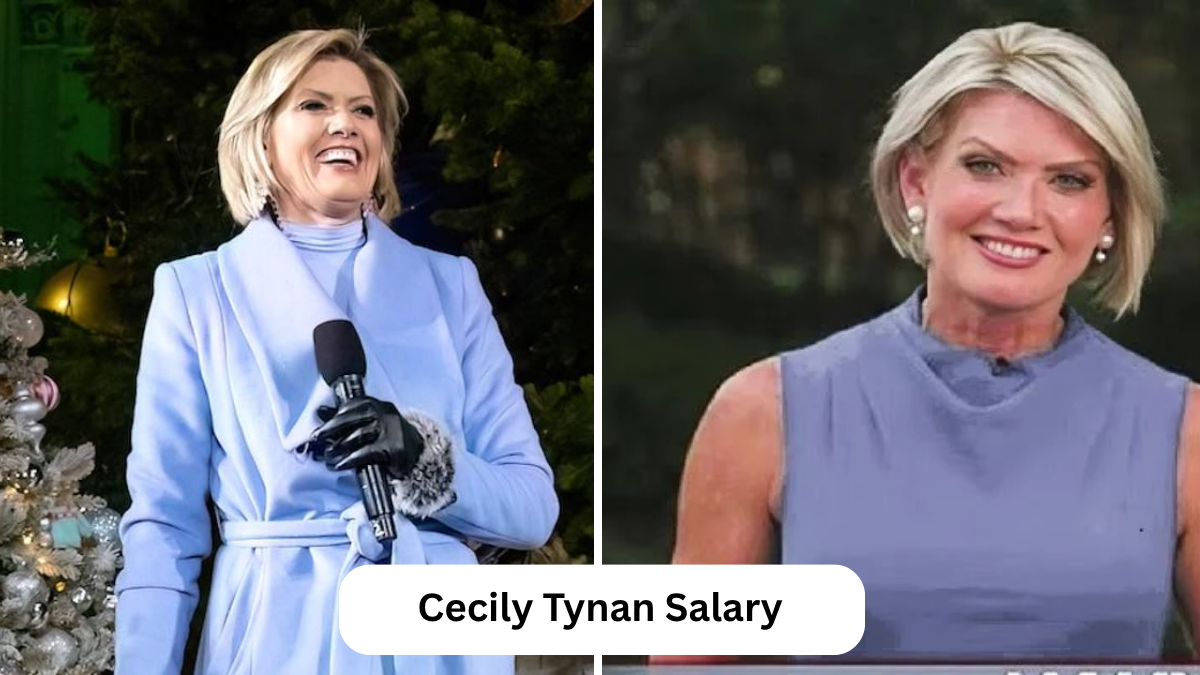
If you’ve searched for Cecily Tynan salary online, you’ve likely encountered wildly conflicting numbers—from a jaw-dropping $625,000 to a modest $60,000. Which is accurate? The confusion stems from outdated reports, the blurring of salary versus net worth, and the lack of official disclosure from WPVI-TV.
This comprehensive analysis clarifies Cecily Tynan’s true earnings in 2026, examining her annual salary as chief meteorologist at 6ABC Action News, her accumulated net worth, and what these figures reveal about her three-decade career in Philadelphia weather forecasting.
Table of Contents
Who is Cecily Tynan? The Philadelphia Weather Icon
Cecily Joan Tynan has become synonymous with Philadelphia weather forecasting, serving as the trusted chief meteorologist at WPVI-TV for nearly three decades. Born March 19, 1969, in Newtown, Connecticut, this television personality transformed from a journalism student into one of the most recognizable weather anchors in the nation’s fourth-largest media market.
Tynan graduated from Washington and Lee University with a double major in Journalism and Politics—not Penn State University, as some sources incorrectly report. After completing her undergraduate education in 1991, she pursued meteorology certification and earned the American Meteorological Society Seal of Approval (#1099), establishing her credentials as a legitimate broadcast meteorologist rather than just a television personality who delivers weather.
Her career trajectory began in smaller markets, including WDBJ in Roanoke, Virginia, where she cut her teeth in weather forecasting, and KTNV-TV in Nevada, where she worked as both a weather anchor and news reporter. In 1995, she joined WPVI-TV (6ABC Action News) in Philadelphia, initially covering weekend weather before ascending to weekday morning broadcasts and eventually claiming the prestigious 5pm, 6pm, and 11pm chief meteorologist slots.
Beyond her broadcasting achievements, Tynan made history in 2012 when she was inducted into the Broadcast Pioneers of Philadelphia Hall of Fame, cementing her legacy in the region’s media landscape. Her personal accomplishments are equally impressive—she’s a dedicated triathlete and marathon runner who even graced the cover of Runner’s World magazine, demonstrating the discipline and endurance that have characterized her professional longevity.
Tynan’s personal life includes her marriage to Greg Watson, an investment manager, and their two children, Emma and Luke. Her first marriage to Michael Badger, a school teacher, ended in 2014. This dual-income household context becomes relevant when examining her financial profile and understanding how her compensation fits within her broader economic picture.
Cecily Tynan Salary Confusion: Breaking Down Conflicting Reports
The internet is awash with contradictory information about Cecily Tynan’s annual salary, creating genuine confusion for anyone researching her compensation. Understanding why these discrepancies exist requires examining the sources and their credibility.
The 2007 Philadelphia Magazine Report ($625,000)
The most frequently cited—and most misleading—salary figure comes from a 2007 Philadelphia Magazine article that pegged Tynan’s earnings at $625,000 annually. This number continues to circulate nearly two decades later, despite being hopelessly outdated and potentially inaccurate even when published.
The local television industry has undergone seismic shifts since 2007. Budget constraints have tightened across broadcast meteorology as advertising revenues declined and stations faced increased competition from digital media. While some veteran personalities grandfathered into pre-recession contracts maintained higher salaries, the overall trend in local TV compensation has been downward pressure, not upward growth.
Furthermore, this figure appeared during a period when local news stations were still riding high on robust advertising revenues before the 2008 financial crisis and subsequent media landscape transformation. Using this 2007 number to represent Tynan’s current yearly earnings is like using 2007 housing prices to estimate today’s real estate market—fundamentally flawed.
Current 2025-2026 Salary Estimates
Contemporary sources provide dramatically different annual earnings estimates, ranging from a low of $60,000 to a high of $200,000. The most credible industry analyses cluster around $75,000 to $85,000, a figure that aligns with Philadelphia market realities and comparable chief meteorologist positions.
TechBusinessField estimates her compensation between $62,000 and $80,000, while Prizmatem suggests $60,000 to $80,000 with $75,500 as the most likely figure. GlowsMagazine offers the widest range at $80,000 to $200,000, though the upper end seems inconsistent with industry standards for local market weather anchors.
Why such variation? Television stations treat employee salaries as confidential business information. Unlike public sector employees whose pay is often disclosed through freedom of information requests, private companies like WPVI-TV have no obligation to reveal compensation details. This creates an information vacuum filled by estimates, educated guesses, and occasionally, unreliable sources.
Salary Estimates by Source:
| Source | Estimated Annual Salary | Year Published |
|---|---|---|
| TechBusinessField | $62,000 – $80,000 | 2025 |
| Prizmatem | $60,000 – $80,000 ($75,500 likely) | 2025 |
| GlowsMagazine | $80,000 – $200,000 | 2025 |
| Philadelphia Magazine | $625,000 | 2007 |
The table above illustrates how contemporary sources converge around a much more modest base salary than the outdated 2007 figure, though even recent estimates show considerable variance.
Cecily Tynan’s True Salary in 2026: Our Analysis
After analyzing industry data, market conditions, and credible reporting, we can establish a realistic picture of Cecily Tynan’s current compensation at 6ABC Action News.
Most Credible Salary Range
Evidence strongly suggests Tynan’s annual salary falls between $75,000 and $85,000. This range makes economic sense when considering Philadelphia’s position as the fourth-largest television market, her role as chief meteorologist with primary responsibility for evening broadcasts, and her three decades of experience in weather forecasting.
This compensation level reflects the reality of local television economics in 2026. While the Philadelphia market commands higher salaries than mid-size or small markets, it still operates within the constraints of local advertising revenues and station budgets that haven’t kept pace with inflation or matched the golden era of broadcast news profitability.
The $75,000-$85,000 range also aligns with Bureau of Labor Statistics data for broadcast meteorologists in major markets. According to industry salary surveys, experienced chief meteorologists in top-ten markets typically earn between $70,000 and $150,000, with most clustering in the lower half of that spectrum unless they possess extraordinary ratings pull or unique contracts negotiated during more prosperous times.
Factors That Determine Her Salary
Multiple variables influence what a broadcast meteorologist earns, and Tynan’s compensation reflects a complex equation of market dynamics and individual factors.
Market size stands paramount. Philadelphia ranks as the fourth-largest television market in the United States with approximately 2.9 million households, positioning it behind only New York, Los Angeles, and Chicago. This substantial viewership base justifies higher salaries than smaller markets but still operates within local advertising economy constraints that differ dramatically from national network budgets.
Experience counts significantly in broadcast negotiations. Tynan’s 30+ years in television, including three decades at WPVI-TV specifically, provides leverage in contract discussions. Longevity demonstrates value to the station, audience loyalty, and institutional knowledge that newer meteorologists cannot match.
Her role as chief meteorologist for the critical 5pm, 6pm, and 11pm newscasts—the highest-rated and most advertiser-valuable time slots—adds premium value to her position. These evening broadcasts generate the bulk of local news revenue, making the meteorologist presenting forecasts during these windows particularly important to station success.
Station ratings and viewer trust play crucial roles. Tynan has built exceptional credibility with Philadelphia audiences over three decades, becoming a familiar, trusted presence in viewers’ homes. This relationship translates to ratings stability and viewer loyalty that stations value highly when structuring compensation packages.
Additional Compensation
Beyond base salary, Tynan likely receives various forms of additional income and benefits that boost her total yearly earnings above the $75,000-$85,000 base range.
Performance-based bonuses often accompany severe weather coverage, when meteorologists work extended hours and ratings typically spike. During major snowstorms, hurricanes affecting the mid-Atlantic, or other significant weather events, Tynan’s compensation package may include incentive pay for the additional demands placed on her time and expertise.
Appearance fees for special broadcasts outside regular newscasts provide supplemental income. Her hosting duties for events like the 6ABC Thanksgiving Day Parade, Philadelphia Flower Show coverage, and 4th of July Parade broadcasts may carry separate compensation beyond her standard contract.
The benefits package accompanying her employment likely includes comprehensive health insurance, retirement account contributions from WPVI-TV, paid time off, and potentially a clothing allowance for on-air wardrobe—benefits that add substantial value beyond cash salary.
Cecily Tynan Net Worth: The Complete Picture
While annual salary represents yearly income, net worth paints a more comprehensive picture of accumulated wealth—and this distinction is crucial for understanding Tynan’s true financial standing.
Estimated Net Worth in 2026
Current analyses estimate Cecily Tynan’s net worth between $1 million and $2 million, a figure accumulated over her entire career spanning more than three decades in broadcast meteorology.
Net worth differs fundamentally from annual earnings. It represents the total value of assets (cash, investments, real estate, retirement accounts, personal property) minus liabilities (mortgages, loans, debts). Someone can have a relatively modest annual salary while building substantial net worth through consistent saving, smart investing, and time in the market.
For Tynan, this $1-2 million net worth reflects steady income accumulation since the early 1990s, compound investment growth, and likely real estate appreciation in the Philadelphia suburbs where she resides. Even assuming conservative salary figures throughout her career, three decades of consistent employment provides ample opportunity to build seven-figure wealth through disciplined financial management.
Sources of Wealth Beyond Salary
Tynan’s net worth derives from multiple income streams beyond her WPVI-TV base salary, creating a diversified financial foundation.
Three decades of consistent earnings at 6ABC Action News form the bedrock of her wealth accumulation. Even if her current salary sits at $75,000-$85,000, earlier contracts during more prosperous broadcasting years likely commanded higher relative purchasing power. Compound this steady income over 30 years with normal investment returns, and substantial wealth accumulation becomes entirely plausible.
Public speaking engagements generate additional income for recognizable media personalities. Tynan’s expertise in meteorology and her status as a trusted Philadelphia figure likely command fees for appearances at schools, universities, corporate events, and conferences focused on science education or weather preparedness.
Community event hosting provides supplemental earnings. Her regular participation in major Philadelphia events—the Thanksgiving Day Parade, various charity functions, and station-sponsored community activities—may include separate compensation or appearance fees beyond her standard broadcasting contract.
Potential endorsement deals could supplement her income, though local market television personalities typically command far smaller endorsement opportunities than national figures. Given her athletic background as a triathlete and marathon runner, partnerships with fitness or athletic brands represent a logical possibility, though there’s no public confirmation of such arrangements.
Real estate investments remain speculative but probable. As a long-time Philadelphia area resident in a dual-income household (her husband Greg Watson works as an investment manager), real estate holdings beyond a primary residence would align with typical wealth-building strategies for professionals in her demographic.
Retirement accounts and disciplined savings over three decades contribute significantly to net worth. Tax-advantaged 401(k) or similar retirement accounts, particularly with employer matching from WPVI-TV, compound dramatically over 30 years of contributions.
Lifestyle and Spending Habits
Understanding net worth requires considering spending patterns, and Tynan’s lifestyle appears notably modest compared to entertainment industry standards.
She resides in suburban Philadelphia rather than exclusive enclaves, maintaining what appears to be an upper-middle-class lifestyle appropriate to a dual-income professional household but far from lavish by television personality standards.
Her public persona emphasizes athletic pursuits—marathon running, triathlons, and fitness activities—rather than conspicuous consumption. These hobbies require investment in training and equipment but pale in comparison to the expensive leisure pursuits of celebrity culture.
The family-focused lifestyle evident in her public appearances and social media presence suggests priorities centered on children’s activities and family experiences rather than luxury spending. This modest lifestyle, combined with steady dual-income household earnings, creates ideal conditions for net worth accumulation even without extraordinary income levels.
Salary vs Net Worth: Understanding the Difference
The confusion between Cecily Tynan’s salary and net worth stems from fundamental misunderstanding of these distinct financial concepts. Clarifying this difference is essential for accurate assessment of her earnings.
What is Salary?
Salary represents annual income received from employment—the yearly earnings paid by WPVI-TV for Tynan’s work as chief meteorologist. This base pay, potentially supplemented by bonuses for special coverage or performance incentives, constitutes her regular compensation for weather forecasting duties.
This income is taxed as ordinary income at federal and Pennsylvania state rates, reducing take-home pay significantly below the gross salary figure. For someone earning $80,000 annually, actual take-home pay after federal taxes, state taxes, Social Security, Medicare, and any retirement contributions might be closer to $55,000-$60,000 depending on filing status and deductions.
Salary represents recurring annual earnings but provides no information about accumulated wealth or financial assets built over time.
What is Net Worth?
Net worth measures total financial position at a specific moment—the sum of all assets minus all liabilities. This calculation includes cash savings, investment accounts, retirement funds, real estate equity, personal property value, and any other assets, reduced by outstanding debts like mortgages, car loans, or credit card balances.
For Tynan, her $1-2 million net worth likely includes retirement account balances built over 30 years, home equity from Philadelphia area real estate appreciation, investment accounts, savings, and other assets accumulated throughout her career.
Net worth grows through multiple mechanisms: income (salary) that’s saved rather than spent, investment returns on saved money, real estate appreciation, retirement account growth, and debt reduction. Someone with a modest salary can build substantial net worth through consistent saving and smart financial management over decades.
Cecily Tynan’s Financial Profile
Tynan’s financial profile exemplifies how modest annual salary can coexist with strong net worth when combined with career longevity and disciplined financial management.
Consider this simplified example: If Tynan averaged $70,000 in annual salary over 30 years (accounting for lower early-career earnings and higher later-career compensation), saved just 15% annually, and achieved modest 6% average investment returns, her retirement and investment accounts alone would exceed $1 million before considering home equity, other savings, or her husband’s income and savings.
This demonstrates why focusing solely on current salary misses the complete financial picture. Her $75,000-$85,000 current annual earnings represent yearly income, while her $1-2 million net worth represents three decades of accumulation, compounding, and wealth building.
How Does Cecily Tynan’s Salary Compare to Other TV Meteorologists?
Context matters when evaluating compensation. Comparing Tynan’s earnings to other broadcast meteorologists reveals where she stands in the industry hierarchy.
National TV Meteorologist Salaries
National network meteorologists occupy a different financial stratosphere than local market weather anchors. Personalities like Al Roker on NBC’s Today Show reportedly earn $8-10 million annually, while The Weather Channel’s Jim Cantore commands estimated compensation in the $200,000-$500,000+ range depending on sources.
These national figures benefit from coast-to-coast exposure, network advertising budgets that dwarf local stations, and often additional income from books, appearances, and endorsements facilitated by national recognition. Their compensation reflects fundamentally different economics than local broadcast meteorology.
Major Market Local TV Meteorologists
Local television weather forecasting operates on entirely different economic principles than national broadcasting, with compensation varying dramatically by market size.
New York and Los Angeles chief meteorologists in top-tier stations typically earn $150,000-$300,000, reflecting the massive advertising markets and station revenues in these coastal powerhouses. These represent the ceiling for local market weather anchor salaries.
Philadelphia, Chicago, Dallas, and other top-ten markets see chief meteorologist salaries ranging from $75,000-$150,000, with most clustering in the $80,000-$120,000 range depending on experience, station performance, and individual contract negotiations.
Mid-size markets like Indianapolis, Kansas City, or Charlotte offer broadcast meteorologists $40,000-$80,000, while small markets may pay entry-level weather anchors just $25,000-$50,000 as they build experience and work toward larger market opportunities.
Where Cecily Tynan Stands
Tynan’s estimated $75,000-$85,000 salary positions her competitively within the Philadelphia market and above average for local broadcast meteorologists nationally, while remaining well below national network personalities.
Her compensation reflects appropriate valuation for her experience level, market size, and role. She earns significantly more than meteorologists in smaller markets or those earlier in their careers, but substantially less than national figures or even some top-tier New York or Los Angeles weather anchors.
This positioning makes economic sense. Philadelphia’s market size supports higher salaries than most cities but cannot match New York or Los Angeles advertising revenues. Tynan’s three decades of experience command premium compensation within this market, but local television economics impose ceilings that national networks don’t face.
TV Meteorologist Salary Comparison:
| Market Size | Average Salary Range | Cecily Tynan’s Position |
|---|---|---|
| National Networks | $200K – $500K+ | Well Below |
| Top 5 Markets (NYC, LA) | $150K – $300K | Below |
| Top 10 Markets (Philly) | $75K – $150K | Mid-range |
| Mid-Size Markets | $40K – $80K | Above |
| Small Markets | $25K – $50K | Well Above |
Career Milestones That Shaped Cecily Tynan’s Earnings
Understanding Tynan’s current compensation requires tracing her career trajectory from journalism student to chief meteorologist at a major market station.
- 1991: Graduated from Washington and Lee University with double major in Journalism and Politics, establishing the educational foundation for her broadcasting career.
- Early 1990s: Began professional broadcasting at WDBJ in Roanoke, Virginia, likely earning entry-level salary in the $20,000-$30,000 range typical for small market beginners in that era.
- Mid-1990s: Advanced to KTNV-TV in Las Vegas, Nevada, working as both weather anchor and news reporter, probably earning $35,000-$50,000 as she moved to a larger market and expanded her responsibilities.
- 1995: Joined WPVI-TV Philadelphia, initially covering weekend weather—a significant market jump that likely boosted her salary to $50,000-$70,000 range, though she wasn’t yet in prime evening slots.
- Late 1990s: Promoted to weekday morning weather forecasting, a step up in visibility and compensation that probably pushed her earnings toward $75,000-$90,000 as she demonstrated value to the station.
- 2003: Took over evening weather slots previously held by Dave Roberts, a major career advancement that likely came with substantial salary increase, potentially reaching $100,000-$125,000 during more prosperous broadcasting years.
- 2009: Solidified her role as chief meteorologist for the critical 5pm, 6pm, and 11pm newscasts, the most valuable time slots in local news that likely brought her compensation to peak levels.
- 2012: Inducted into Broadcast Pioneers of Philadelphia Hall of Fame, cementing her status as a Philadelphia media institution and strengthening her negotiating position for contract renewals.
- 2024-2026: Expanded to streaming exclusive edition at 6:30pm as WPVI-TV adapts to digital platforms, though this may represent additional duties rather than significant compensation increase given budget realities in contemporary local television.
Each promotion and contract renegotiation likely brought salary increases, though the overall trend in local television since 2008-2010 has been toward budget consciousness and salary restraint. Tynan’s current $75,000-$85,000 salary may actually represent a decline from peak earning years adjusted for inflation, even as her nominal salary remained stable or increased modestly.
The Philadelphia TV Market Impact on Meteorologist Salaries
Geographic location fundamentally shapes broadcast meteorologist compensation, and Philadelphia’s characteristics as a media market directly influence what WPVI-TV can pay its chief weather anchor.
Philadelphia ranks as the fourth-largest television market in the United States, trailing only New York, Los Angeles, and Chicago. This substantial market encompasses approximately 2.9 million television households across southeastern Pennsylvania, southern New Jersey, and northern Delaware.
This market size generates advertising revenues that support higher salaries than smaller cities but within constraints that differ from the top three coastal giants. Philadelphia stations compete for regional advertising dollars from car dealerships, local retailers, medical centers, and other businesses serving the Delaware Valley—a robust but geographically limited advertising base compared to national campaigns.
The competitive landscape includes multiple stations vying for viewers: WPVI-TV (ABC), KYW-TV (CBS), WCAU (NBC), WTXF (Fox), and others. This competition drives stations to invest in recognizable talent who build viewer loyalty, but budget limitations mean compensation can’t match what network positions or top-tier market stations offer.
Cost of living considerations factor into salary negotiations. Philadelphia’s housing costs, taxes, and general expenses sit below New York or Los Angeles but above many mid-size markets. A $80,000 salary in Philadelphia provides comfortable middle-class lifestyle but wouldn’t replicate the same purchasing power in lower-cost regions.
Comparing Philadelphia to other major markets illuminates salary expectations: Chicago meteorologists in similar roles likely earn comparable amounts ($75,000-$130,000), while Dallas or Houston might pay slightly less ($70,000-$110,000), and Boston or Washington, D.C. might offer marginally more ($80,000-$140,000) depending on individual stations and contracts.
Why Salary Reports Vary So Widely
The dramatic variance in reported salary figures for Cecily Tynan—and television personalities generally—stems from systematic information gaps and unreliable estimation methods.
Lack of Official Disclosure
WPVI-TV, as a privately-held company under ABC Owned Television Stations, maintains no obligation to disclose employee compensation. Unlike publicly-traded corporations that must reveal executive pay or government agencies subject to freedom of information laws, private broadcast stations treat employee salaries as confidential business information.
This secrecy creates an information vacuum. Without official confirmation, all salary figures represent estimates, educated guesses, or occasionally leaked information from anonymous sources. No website can definitively state Tynan’s exact salary without access to her contract, which neither she nor WPVI-TV publicly share.
Sources of Salary Information
Various methodologies generate the salary estimates appearing online, each with significant limitations.
Bureau of Labor Statistics data provides occupational averages for “broadcast meteorologists” categorized by metropolitan area, offering useful benchmarks but no individual-specific information. These averages help establish reasonable ranges but cannot pinpoint one person’s earnings.
Industry insider reports occasionally surface through trade publications or media blogs, sometimes based on contract negotiations, union discussions, or station employees sharing information. These can be accurate but are impossible to verify and may reflect outdated information.
Contract leaks rarely occur but occasionally emerge during legal disputes, union negotiations, or corporate transactions. The 2007 Philadelphia Magazine article might have been based on such a leak, though even if accurate then, it’s irrelevant nearly 20 years later.
Self-reporting platforms like Glassdoor, Payscale, or Indeed aggregate user-submitted salary data, but television meteorologist samples are small, unverified, and often reflect broad ranges rather than specific positions. A “meteorologist in Philadelphia” entry might come from someone at a different station, with less experience, or in a different role entirely.
Why You Should Be Skeptical
Critical evaluation of online salary claims requires understanding how misinformation perpetuates in the digital ecosystem.
Many websites citing Tynan’s salary use identical sources, creating an illusion of consensus when they’re all repeating the same potentially inaccurate information. Five sites claiming the same figure may all derive from one original source of questionable reliability.
Outdated information gets recycled endlessly. The 2007 Philadelphia Magazine $625,000 figure continues appearing in 2026 articles, often without clarifying its age, because content farms and AI-generated articles scrape older sources without verification.
Clickbait headlines inflate numbers to attract attention. “Cecily Tynan’s Shocking Salary Revealed!” generates more clicks than “Local Meteorologist Earns Market-Appropriate Compensation,” incentivizing exaggeration.
Confusion between salary and net worth creates another common error. Articles conflating her annual earnings with accumulated wealth over 30 years produce wildly inaccurate salary claims.
The most reliable approach combines multiple credible sources, applies industry knowledge about market-appropriate compensation, cross-references with Bureau of Labor Statistics data, and acknowledges uncertainty rather than claiming false precision.
Cecily Tynan’s Education and Credentials
Professional qualifications directly impact earning potential in broadcast meteorology, and Tynan’s educational background and certifications establish her credibility and marketability.
Tynan graduated from Washington and Lee University in Lexington, Virginia, with a double major in Journalism and Politics. This educational foundation provided strong communication skills and analytical thinking essential for effective weather broadcasting. Notably, she did NOT attend Penn State University, despite some sources incorrectly reporting this—a factual error that persists across multiple websites and underscores the unreliability of some online information.
After completing her undergraduate degree, Tynan pursued meteorology certification post-graduation, recognizing that journalism skills alone wouldn’t suffice for credible weather forecasting. This additional training distinguished her from television personalities who deliver weather without scientific credentials.
Her American Meteorological Society Seal of Approval (#1099) represents the gold standard certification in broadcast meteorology. The AMS Certified Broadcast Meteorologist designation requires demonstrated meteorological knowledge, forecasting ability, and adherence to professional standards. This credential significantly enhances credibility with audiences and justifies higher compensation than non-certified weather presenters.
Continuous professional development throughout her career keeps Tynan current with evolving meteorological science, forecasting technology, and communication techniques. This ongoing education maintains her relevance and expertise in an increasingly sophisticated field where radar technology, computer modeling, and climate science constantly advance.
These credentials directly impact earning potential. Stations can market AMS-certified meteorologists as qualified experts, building viewer trust and differentiating their newscasts from competitors who might employ less-qualified weather personalities. This credibility translates to ratings value and justifies premium compensation within market constraints.
Additional Income Streams for TV Meteorologists
Beyond base salary from WPVI-TV, Tynan likely generates supplemental income through various professional activities that leverage her expertise and public recognition.
Public Speaking
Educational institutions frequently invite meteorologists to speak about weather science, climate change, severe weather preparedness, or careers in atmospheric science. Tynan’s three-decade career and AMS certification make her an attractive speaker for schools, universities, and academic conferences exploring meteorology or science communication.
Corporate events seeking keynote speakers on topics like risk management, disaster preparedness, or communication under pressure might engage Tynan’s services. Her experience delivering critical weather information during hurricanes, snowstorms, and severe weather events provides relevant expertise for business audiences.
Science education advocacy represents another speaking opportunity. Organizations promoting STEM education, encouraging young people toward atmospheric science careers, or advancing public understanding of climate and weather phenomena might compensate Tynan for presentations and panel participation.
Speaking fees for local media personalities typically range from $2,000-$10,000 per appearance depending on audience size, event prestige, and preparation required—substantially less than national celebrity speakers but meaningful supplemental income nonetheless.
Community Event Hosting
Tynan’s visibility in Philadelphia generates opportunities for paid event hosting beyond her regular broadcasting duties.
The 6ABC Thanksgiving Day Parade represents her most prominent annual hosting responsibility, a major Philadelphia tradition viewed by hundreds of thousands. This broadcast likely includes separate compensation beyond her regular weather forecasting salary.
Philadelphia Flower Show coverage, 4th of July Parade broadcasts, and other station-sponsored community events may carry appearance fees or bonuses for the additional time and preparation required. While technically part of her WPVI-TV relationship, these special events often involve compensation structures distinct from daily newscast salaries.
Charity events, fundraisers, and community organization functions sometimes hire local television personalities as hosts or emcees, generating additional income while supporting civic causes and maintaining public visibility.
Endorsements and Sponsorships
Local market television personalities command far smaller endorsement opportunities than national celebrities, but some partnership possibilities exist for someone with Tynan’s profile.
Local business partnerships represent the most likely endorsement avenue—Philadelphia-area retailers, service providers, or restaurants might engage Tynan for advertising campaigns targeting the regional market where her face recognition is strongest.
Athletic brand partnerships align naturally with her triathlete and marathon runner background. Running shoe companies, fitness equipment manufacturers, or athletic apparel brands might see value in association with a disciplined athlete who also commands public recognition in a major market.
These opportunities remain limited compared to national personalities. While someone like Al Roker might secure six-figure endorsement deals with major national brands, local market meteorologists typically see far more modest endorsement income if any materializes at all.
Media Appearances
Guest spots on other shows, whether local talk programs, regional news features, or even national weather-related programming, occasionally provide supplemental income. These appearances might include compensation or simply serve as promotional cross-platform visibility.
Podcast appearances have proliferated as that medium expands, though many podcast interviews offer exposure rather than payment unless the podcast operates on a commercial scale with significant audience.
Social media monetization remains limited for most local television personalities. While Tynan maintains social media presence for professional communication and audience engagement, weather forecasters rarely build the massive follower counts that generate substantial Instagram or TikTok revenue.
Personal Life and How It Affects Earnings
Understanding Tynan’s compensation requires considering her personal circumstances and how they might influence career and contract decisions.
Tynan married Greg Watson, an investment manager, creating a dual-income professional household. This financial foundation means her broadcasting salary doesn’t solely support the family, potentially affecting her contract negotiations differently than if she were the sole earner. Watson’s career in finance likely provides substantial income, retirement savings, and financial security independent of her television work.
Together they’re raising two children, Emma and Luke, creating family commitments that influence career decisions. The demands of parenting might affect willingness to relocate for higher-paying positions in larger markets or accept contracts requiring additional travel or unpredictable scheduling.
Her first marriage to Michael Badger, a school teacher, ended in 2014. This previous relationship and its conclusion represent personal history without clear financial implications, though divorce proceedings sometimes involve asset division that could affect net worth calculations.
Tynan’s dedication to athletics—competing in triathlons and running marathons—requires significant time investment for training. This commitment might factor into contract negotiations regarding schedule flexibility or time off for competition preparation. However, her athletic pursuits also contribute to her public image as a disciplined, health-focused professional, potentially enhancing her marketability.
Work-life balance considerations become increasingly important for professionals in their mid-50s. At age 56 in 2026, Tynan might prioritize schedule predictability, reduced stress, and family time over maximum earnings, accepting somewhat lower salary in exchange for better quality-of-life provisions in her contract.
The dual-income household context means evaluating her $75,000-$85,000 salary as one component of combined family income likely exceeding $150,000-$200,000 or more annually. This context matters for assessing financial security and lifestyle affordability.
The Future of Cecily Tynan’s Career and Earnings
Looking ahead, several factors will shape Tynan’s remaining career trajectory and potential earnings evolution.
Career Longevity Considerations
At 56 years old in 2026, Tynan faces decisions about how many more years she’ll continue daily broadcasting. While some television personalities work well into their 60s or even 70s, the demands of daily news preparation, unpredictable severe weather coverage, and early morning/late evening broadcasts become increasingly taxing with age.
Retirement timeline considerations likely factor into current contract negotiations. If she anticipates working another 5-10 years before retiring, her compensation priorities might shift toward maximizing retirement contributions, securing benefits continuation, or negotiating transition arrangements rather than pursuing maximum salary.
The transition to streaming platforms represents both opportunity and uncertainty. Her 6:30pm streaming exclusive edition on WPVI-TV’s digital platforms signals the station’s adaptation to changing media consumption, but whether this expands her role and compensation or simply adds duties without proportional pay increase remains unclear.
Potential Earnings Growth
Contract renegotiations typically occur every 3-5 years for established television personalities. Tynan’s next contract might bring modest salary increases keeping pace with inflation, though dramatic compensation growth seems unlikely given local television economic realities.
Expanded streaming roles could theoretically increase earnings if digital platforms generate new revenue streams for stations and they share this growth with on-air talent. However, the more common pattern sees digital expansion adding workload without proportional compensation increases.
Post-retirement consulting opportunities might emerge. Tynan’s three decades of forecasting experience, institutional knowledge of Philadelphia weather patterns, and communication expertise could be valuable to weather technology companies, consulting firms, or educational institutions after she leaves daily broadcasting.
Possible transition to periodic special coverage rather than daily newscasts could extend her career on reduced schedule, maintaining income while easing toward full retirement. This phased approach has become increasingly common for veteran broadcasters.
Industry Trends
The shift to digital and streaming platforms transforms local television economics, though implications for meteorologist salaries remain ambiguous. While digital expansion theoretically reaches broader audiences, monetization through streaming hasn’t yet compensated for declining traditional broadcast advertising revenues.
Budget constraints in local television continue pressuring compensation across the industry. As stations reduce staff, consolidate operations, and seek efficiency, salary growth for even veteran personalities faces headwinds.
The changing media landscape sees audiences fragmenting across platforms, potentially reducing the leverage any individual personality commands. When viewers access weather information through apps, websites, social media, and multiple television sources, one meteorologist’s ratings impact diminishes.
These trends suggest Tynan’s salary likely remains relatively stable in nominal terms for her remaining career, with modest cost-of-living increases but no dramatic growth, and potential downward pressure if industry economics continue deteriorating.
What the Experts Say: Industry Insights
Professional labor market data and industry analysis provide context for understanding broadcast meteorologist compensation.
The U.S. Bureau of Labor Statistics reports that the median annual wage for atmospheric scientists, including weather forecasters, was $96,530 as of May 2023. However, this figure aggregates research meteorologists, government forecasters, and broadcast meteorologists across all markets, making direct comparison to Tynan’s specific situation imperfect.
More specifically, broadcast meteorologists as a subcategory show wide salary variation. The BLS indicates that the lowest 10% earn less than $50,000 annually, while the highest 10% exceed $150,000. This distribution reflects the dramatic differences between small market entry-level positions and major market chief meteorologist roles.
Broadcast industry salary trends show stagnation or modest decline in local television news over the past 15 years when adjusted for inflation. The advertising revenue boom years of the 1990s and early 2000s supported robust salary growth, but the 2008-2010 period marked a turning point toward budget consciousness that persists today.
Expert opinions on the Philadelphia market specifically suggest it maintains strong journalistic traditions and relatively stable news operations compared to some markets where ownership changes or corporate cost-cutting more dramatically impacted compensation. WPVI-TV’s position as an ABC-owned-and-operated station potentially provides more stability than independently-owned competitors.
Meteorology career outlook remains positive for employment growth (projected 6% through 2033, slightly faster than average), driven by increasing demand for weather information related to climate change, severe weather, and disaster preparedness. However, employment growth doesn’t necessarily translate to salary growth, particularly in mature broadcasting careers.
Technology’s impact on weather forecaster salaries cuts both ways. Advanced radar, computer modeling, and forecasting tools make meteorologists more effective but also potentially reduce the differential between highly experienced forecasters and younger colleagues who adapt quickly to new technologies, potentially compressing salary ranges.
FAQs About Cecily Tynan’s Salary and Net Worth
Q1: What is Cecily Tynan’s exact salary in 2026?
While exact figures aren’t publicly disclosed, credible estimates place her salary between $75,000–$85,000 based on industry standards and Philadelphia market analysis.
Q2: Is the $625,000 salary figure accurate?
No. This outdated 2007 figure doesn’t reflect current local television economics or her present compensation structure.
Q3: What is Cecily Tynan’s net worth?
Estimates range from $1 million to $2 million, accumulated through her 30+ year broadcasting career.
Q4: How much do chief meteorologists make?
In major markets like Philadelphia, chief meteorologists typically earn $75,000–$150,000, depending on experience and market size.
Q5: Does Cecily Tynan have other sources of income?
Yes. These can include public speaking engagements, event hosting, and possibly endorsements beyond her WPVI-TV salary.
Q6: How does her salary compare to national weather personalities?
National network meteorologists often earn $200K–$500K+, significantly more than local market professionals like Tynan.
Q7: Why are there so many different salary estimates online?
Television stations don’t disclose salaries, so websites rely on industry averages and assumptions, which leads to wide variations.
Q8: Did Cecily Tynan go to Penn State?
No. She graduated from Washington and Lee University, where she majored in journalism and politics.
The Bottom Line on Cecily Tynan’s Salary vs Net Worth
After comprehensive analysis, the most credible estimate places Cecily Tynan’s annual salary at $75,000-$85,000 in 2026, while her net worth reaches $1-2 million accumulated over three decades. The frequently-cited $625,000 figure represents outdated 2007 data irrelevant to her current compensation.
Her earnings appropriately reflect her experience, Philadelphia’s market size, and her role as chief meteorologist, positioning her competitively within local television while remaining well below national network personalities.
Understanding the distinction between yearly earnings and accumulated net worth is essential—her modest salary coexists with substantial wealth built through career longevity and financial discipline. Her true value extends beyond dollars to the trust and credibility she’s established with Philadelphia viewers throughout her remarkable career.