Will you have enough money to retire comfortably? This question keeps millions of Americans awake at night, staring at retirement account statements and wondering if they’re on the right track. Dave Ramsey’s approach to retirement planning has helped countless people find clarity in this confusion, offering straightforward tools and rules that cut through the complexity.
His retirement calculator and the famous 15% rule have become cornerstones of retirement planning for those seeking financial security in their golden years.
This comprehensive guide will walk you through exactly how to use the Dave Ramsey retirement calculator, explain the math behind the 15% retirement savings rule, and help you determine if this approach fits your unique situation in 2026.
Table of Contents
What Is the Dave Ramsey Retirement Calculator?
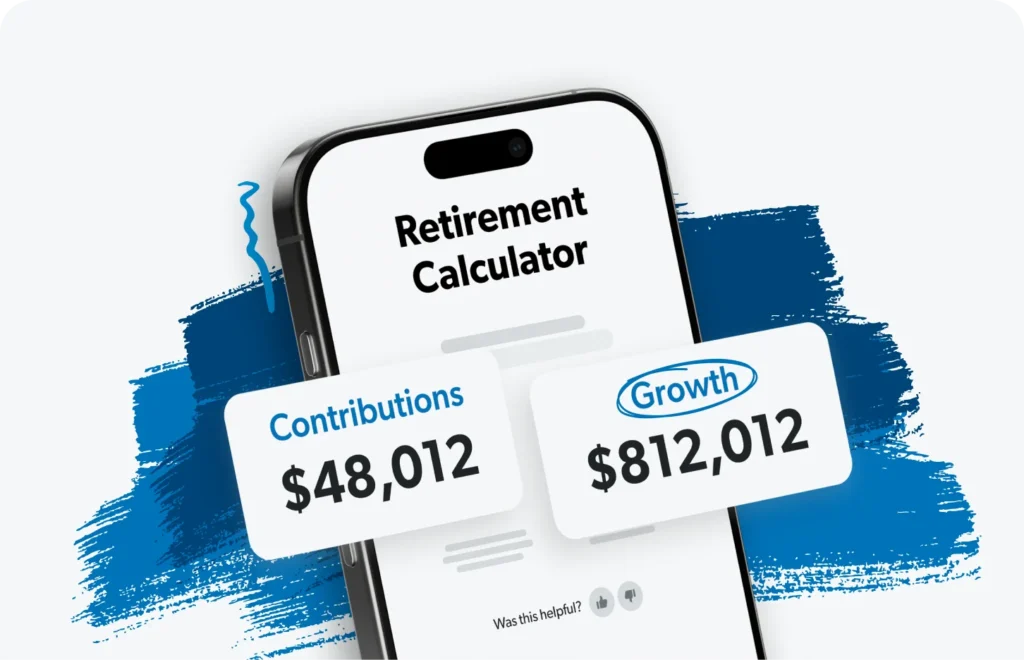
The Dave Ramsey retirement calculator is a free online tool available on the Ramsey Solutions website that helps you project your retirement nest egg based on consistent monthly contributions and expected investment returns. Unlike complex financial planning software that requires dozens of inputs and assumptions, this calculator focuses on simplicity and action.
What makes this calculator different from others is its foundation in Ramsey’s debt-free philosophy and emphasis on tax-advantaged accounts like 401k and IRA options. The tool doesn’t get bogged down in minute details about Social Security projections, pension benefits, or detailed tax scenarios. Instead, it answers one fundamental question: If I invest this much money every month until retirement age, how much will I have?
The calculator requires just five basic inputs: your current age, planned retirement age, current investment balance across all retirement accounts, monthly contribution amount, and expected annual rate of return. Within seconds, you get a projection showing your potential retirement nest egg, broken down into your initial balance, total contributions, and investment growth through compound interest.
You’ll find the calculator embedded directly on the Ramsey Solutions website under their retirement planning resources. The interface is clean and straightforward—no complicated charts or confusing terminology. Simply plug in your numbers and see if you’re on track to retire comfortably.
Understanding Dave Ramsey’s 15% Retirement Savings Rule
What Is the 15% Rule?
Dave Ramsey’s 15% rule is beautifully simple: invest 15% of your gross household income into tax-advantaged retirement accounts every single month, consistently, without fail. This isn’t 15% of your take-home pay—it’s 15% of your income before taxes and deductions. The rule applies once you’ve completed the first three Baby Steps: saving a $1,000 starter emergency fund, paying off all debt except your mortgage, and building a fully funded emergency fund of 3-6 months of expenses.
This percentage represents your total retirement investment portfolio contributions, including any employer match you receive. If your company offers a 401k match, that counts toward your 15%. The remainder goes into Roth IRA accounts (if you qualify) or back into your workplace retirement plan.
Why 15% Specifically?
The math behind 15% is both compelling and surprisingly straightforward. Let’s break down a real example: Someone earning $70,000 annually would invest $10,500 per year ($875 per month). Assuming Dave Ramsey’s expected 10-11% average annual return over 30 years, this person would accumulate between $2 million and $2.5 million by retirement age.
This projection relies heavily on the power of compound interest—your money earning returns, and those returns generating their own returns over time. A $1,000 monthly contribution growing at 11% annually for 30 years doesn’t just add up to $360,000 in contributions; it grows to approximately $2.3 million. That extra $1.9 million comes entirely from compound interest working in your favor.
The 15% figure balances aggressive wealth building with maintaining quality of life today. It’s enough to build substantial retirement income without requiring extreme sacrifices that make people quit their investment plans altogether. Historical market data shows that consistent contributions at this level, starting early enough, typically result in a retirement nest egg sufficient to maintain your pre-retirement lifestyle.
Why Not More or Less?
Dave Ramsey specifically chose 15% because it fits within his broader Baby Steps framework for financial goals. After investing 15%, you still have income available for Baby Step 5 (saving for children’s college education) and Baby Step 6 (paying off your home mortgage early). This creates a balanced approach to building wealth while simultaneously eliminating debt.
If you invested less—say 10%—the numbers simply don’t work for most people to achieve financial security in retirement. You’d fall short of accumulating enough for a comfortable retirement, especially if you’re starting in your 30s or 40s. Conversely, investing significantly more than 15% might mean neglecting other important financial goals like becoming completely debt-free, which Ramsey views as essential to long-term financial peace.
The 15% rule also accounts for real-world living expenses and unexpected costs. It’s a sustainable rate that most middle-income earners can maintain consistently through various life stages—job changes, raises, recessions, and personal challenges. Consistency matters more than perfection in retirement planning, and 15% hits the sweet spot of being both impactful and maintainable over decades.
How to Use the Dave Ramsey Retirement Calculator: Step-by-Step Guide
Before You Start
Gather all your financial information before opening the calculator. You’ll need to know your current total retirement savings across all accounts—your 401k, traditional IRA, Roth IRA, and any other retirement investment portfolio balances. Don’t include regular savings accounts, just tax-advantaged retirement accounts. Also, have your current gross annual income ready, as you’ll need this to calculate your 15% monthly contribution.
Understanding where you stand today makes the calculator’s projections meaningful. If you’re just beginning your retirement journey, you might have zero in current savings, and that’s perfectly fine. The calculator will show you the power of consistent monthly contributions over time, even starting from nothing.
Step 1: Enter Your Current Age
Input your current age in years. This seems simple, but it’s the foundation for calculating your investment timeline. The calculator uses this to determine how many years of compound interest growth you have between now and retirement age. Every year matters significantly—someone starting at 25 has a massive advantage over someone starting at 35, even with identical contribution amounts, purely because of the extra decade of compound growth.
Step 2: Choose Your Retirement Age
Select when you plan to stop working and begin living off your retirement nest egg. For most Americans born in 1960 or later, full retirement age for Social Security purposes is 67, though you can begin taking reduced benefits at 62. Dave Ramsey typically uses 67 as the standard retirement age in his examples, assuming you’ll work a normal career span.
Your retirement age dramatically impacts your results. Retiring at 62 instead of 67 means five fewer years of contributions and five fewer years of investment growth, requiring either higher contribution rates or accepting a smaller nest egg. Conversely, working until 70 gives you extra years to save and allows your existing investments more time to grow.
Step 3: Input Current Investment Balance
Enter the total dollar amount you currently have saved across all retirement accounts. Add up everything: your 401k balance, traditional IRA, Roth IRA, 403(b) if you work for a nonprofit, TSP if you’re in government service, and any mutual funds specifically designated for retirement. Don’t include regular brokerage accounts, savings accounts, or college savings plans—only money in tax-advantaged retirement accounts.
If you’re starting from zero, enter $0. The calculator will show you can still build substantial wealth through consistent contributions. If you have $50,000, $100,000, or more already saved, that head start makes a significant difference because that money has more time to benefit from compound interest than money you’ll contribute later.
Step 4: Monthly Contribution Amount
Calculate 15% of your gross annual household income, then divide by 12 to get your monthly investment amount. For someone earning $60,000 annually: $60,000 × 0.15 = $9,000 per year, or $750 per month. For a $100,000 salary: $100,000 × 0.15 = $15,000 annually, or $1,250 monthly.
Remember, this 15% includes your employer match if you have one. If your employer contributes 5% and you contribute 10%, you’ve hit your 15% target. Input the total monthly amount going into retirement accounts from all sources. If you’re married, combine both incomes and calculate 15% of the household total.
Step 5: Expected Annual Return
This is where controversy enters. Dave Ramsey recommends using 10-12% as your expected annual return, based on the historical average of growth stock mutual funds and the S&P 500 over long periods. The S&P 500 has returned approximately 10% annually since its inception in 1926, including both bull markets and crashes.
However, many financial experts argue this is overly optimistic, especially when accounting for inflation and fees. A more conservative approach uses 7-8% as the expected return. For your first calculation, try Ramsey’s 10-11% to see his projected scenario, then run it again at 7-8% to see a more conservative estimate. The reality will likely fall somewhere in between, depending on your actual investment portfolio allocation and market conditions over your specific investment timeline.
Reading Your Results
The calculator displays your projected retirement balance at your chosen retirement age. This number represents your total nest egg, broken into three components: your initial investment balance (what you started with), total contributions (all the money you deposited over the years), and investment growth (the compound interest earned).
Understanding this breakdown matters. If your projection shows $2 million at retirement and $600,000 came from contributions, that means $1.4 million came purely from compound interest and investment returns. This illustrates why starting early and staying consistent matters so much—the growth component typically dwarfs your actual contributions over long timeframes.
The Formula Behind Dave Ramsey Retirement Calculator

The 25x Rule Explained
At the heart of Dave Ramsey’s retirement philosophy is the 25x rule: you need 25 times your expected annual expenses saved to retire safely. This formula connects to the safe withdrawal rate concept in retirement planning. If you withdraw 4% of your nest egg annually (1/25th), historical data suggests your money should last throughout a 30-year retirement without running out.
The math is straightforward: Desired annual retirement income × 25 = Required nest egg. This assumes you’ll live primarily off the investment returns your money generates, not by depleting the principal. Your retirement savings continue growing (ideally) even as you withdraw from them, creating a sustainable income stream for your golden years.
Real-World Example
Let’s say you want $40,000 per year in retirement income beyond Social Security. Using the 25x rule: $40,000 × 25 = $1,000,000 needed in your retirement nest egg. At a 4% withdrawal rate, you’d take out $40,000 annually while the remaining $960,000 continues growing in your investment portfolio.
Want $60,000 per year for a more comfortable retirement? You’d need $1.5 million saved ($60,000 × 25). Want $80,000 annually? That requires $2 million. This formula helps you set concrete financial goals rather than saving blindly without knowing if it’s enough.
For someone earning $75,000 today, expecting to need 80% of current income in retirement (a common planning assumption), you’d need roughly $60,000 annually. If Social Security provides $25,000, you need $35,000 from investments, requiring $875,000 saved ($35,000 × 25). This personalized calculation shows whether the 15% rule will get you there based on your current age and income.
The Math of Compound Interest
Compound interest is the engine that transforms modest monthly contributions into seven-figure retirement accounts. Unlike simple interest that only earns returns on your principal, compound interest earns returns on your returns, creating exponential growth over time.
Consider investing $1,000 per month with an 11% average annual return over 30 years. Your total contributions equal $360,000 ($1,000 × 12 months × 30 years). But compound interest transforms this into approximately $2.3 million. That extra $1.94 million represents investment growth—nearly 5.4 times your actual contributions.
The real power emerges in the later years. In year one, your $12,000 in contributions might earn $1,320 in returns (11%). But in year 25, when you have $1.5 million already invested, that same 11% return generates $165,000 in growth for that year alone—far exceeding your annual $12,000 contribution. This is why starting early, even with smaller amounts, beats starting late with larger contributions. Time multiplies money far more effectively than higher contribution rates alone.
Assumptions Built Into the Calculator (You Need to Know These)
Investment Return Assumptions
Dave Ramsey’s 10-12% expected annual return assumption generates significant debate among financial professionals. This figure comes from studying the S&P 500’s historical performance since 1926, which shows approximately 10% average annual returns including dividends. Ramsey argues that growth stock mutual funds, particularly when diversified across different categories, have historically delivered these returns over multi-decade periods.
The controversy centers on whether past performance indicates future results and whether these are nominal or inflation-adjusted returns. Critics point out that after adjusting for inflation (averaging 3% annually), real returns drop to 7-8%. Additionally, investment fees (even low-cost index funds charge some fees) further reduce actual investor returns.
Financial advisors often recommend more conservative projections, especially as you approach retirement age. Using 7-8% as your expected return provides a buffer against market volatility and unexpected downturns. If you ultimately earn 10%, you’ll have more than projected—a pleasant surprise. If you earn 7%, you won’t face a retirement shortfall.
The 4% Withdrawal Rate
The calculator’s underlying assumption follows the “4% rule,” developed from the Trinity Study and widely accepted in retirement planning. This rule suggests withdrawing 4% of your retirement nest egg in your first year of retirement, then adjusting that dollar amount for inflation each subsequent year. Historical analysis shows this strategy provides a very high probability (90%+) that your money lasts 30 years across various market conditions.
However, recent analysis questions whether 4% remains safe given today’s lower expected returns and longer life expectancies. Some experts now recommend 3-3.5% as more prudent, especially for early retirees. A 3.5% withdrawal rate means you’d need 28.5x your annual expenses (instead of 25x), significantly increasing the required nest egg.
What the Calculator DOESN’T Include
Understanding the calculator’s limitations is crucial for realistic planning. It doesn’t account for inflation’s impact on your purchasing power. That $2 million at retirement won’t buy in 2056 what $2 million buys today. At 3% inflation over 30 years, today’s dollar only purchases about 41 cents worth of goods.
Tax implications aren’t factored in either. Withdrawals from traditional 401k and IRA accounts face ordinary income taxation. If you need $60,000 to live on and you’re in the 22% tax bracket, you actually need to withdraw roughly $77,000 to net $60,000 after taxes. Roth accounts provide tax-free withdrawals in retirement, which is why Ramsey emphasizes them.
Healthcare costs represent a massive retirement expense the calculator ignores. The average couple retiring at 65 needs approximately $315,000 just for healthcare expenses throughout retirement, according to recent estimates. Medicare covers much but not all healthcare costs, and you’ll need supplemental insurance plus out-of-pocket expenses for deductibles, copays, and uncovered services.
The calculator also doesn’t incorporate Social Security income, which could reduce how much you need from personal savings. It ignores market fluctuations and volatility—showing a smooth growth line instead of the actual ups and downs you’ll experience. It assumes constant contributions at the same level, not accounting for career changes, pay raises, job losses, or periods when you might need to reduce contributions.
Is 15% Enough? When It Works and When It Doesn’t
When 15% Works Well
The 15% rule delivers excellent results for people starting in their 20s or early 30s. A 25-year-old investing 15% of a $50,000 salary has 40+ years for compound interest to work its magic. Even with modest salary growth over their career, they’ll likely accumulate $2-3 million, providing comfortable retirement income.
For median to above-median earners ($70,000+ in 2026), 15% typically proves sufficient to maintain pre-retirement lifestyle. Someone earning $80,000 investing $12,000 annually for 30-35 years will build substantial wealth even with conservative 8% return assumptions.
The rule works best when combined with Ramsey’s complete Baby Steps framework. If you’re debt-free except for a mortgage, with a fully funded emergency fund, that 15% represents pure wealth building without competing financial emergencies derailing your plans. You’re not robbing your retirement contributions to cover credit card bills or unexpected car repairs.
People planning traditional retirement ages (65-67) find 15% generally adequate. You have a full career’s length for contributions and growth, and you’re not trying to fund 40+ years of retirement like someone retiring at 55.
When You Need to Save More Than 15%
Late starters—those beginning serious retirement investing in their 40s or 50s—must save significantly more than 15% to catch up. A 45-year-old with minimal retirement savings needs roughly 25-30% of income invested to build an adequate nest egg by 67. They’ve lost 20 years of compound interest growth, which can’t be recovered just by matching younger workers’ contribution rates.
Early retirement aspirations require higher savings rates. If you want to retire at 55 instead of 67, you need enough money to last potentially 40+ years, and you have 12 fewer years to save. This typically demands 25-35% savings rates, sometimes higher depending on desired retirement income and current age.
High lifestyle expectations need higher savings. If you’re currently spending $150,000 annually and expect to maintain that in retirement (beyond what Social Security provides), you’ll need $3-4 million saved. For most people, 15% won’t reach that target unless starting very early with very high income.
If you’re significantly behind on retirement savings—perhaps you started late, took time off work, or had financial setbacks—15% represents minimum damage control, not a catch-up strategy. You might need 20-30% combined with working longer to reach adequate savings levels.
No employer match changes the equation too. The 15% rule assumes many people receive some employer contribution. If your company offers zero retirement benefits, you’re shouldering the entire 15% yourself, whereas someone with a 5% match only personally contributes 10%.
Real Examples with Numbers
Scenario 1: Sarah, 30 years old, earning $75,000 annually. She invests 15% ($11,250/year or $937.50/month). Starting from $0, assuming 9% average returns over 35 years until retirement at 65, she’ll accumulate approximately $2.6 million. Using the 4% rule, that provides $104,000 annual retirement income before Social Security, far exceeding her current lifestyle needs.
Scenario 2: Michael, 45 years old, earning $100,000 with only $50,000 saved. Investing 15% ($15,000/year or $1,250/month) at 9% returns for 22 years until 67 nets roughly $1.1 million total. That provides only $44,000 annual income via the 4% rule. Combined with Social Security, he might be okay, but he’s cutting it close. Increasing to 25% ($25,000/year) would yield approximately $1.6 million, providing much more comfortable retirement income of $64,000 annually.
Scenario 3: Jessica, 25 years old, earning $50,000. She invests 15% ($7,500/year or $625/month) for 40 years at 9% returns, building approximately $2.5 million by 65. Despite her lower salary, her early start creates remarkable wealth through compound interest. She can retire comfortably on $100,000 annually (4% rule) despite never earning six figures during her career.
How to Actually Invest Your 15% (Dave Ramsey’s Recommended Strategy)
Step 1: Complete Baby Steps 1-3 First
Dave Ramsey’s system requires completing specific milestones before investing 15% for retirement. First, save a $1,000 starter emergency fund for immediate unexpected expenses. Second, attack all non-mortgage debt using the debt snowball method—paying smallest to largest balances regardless of interest rates. Third, build a fully funded emergency fund covering 3-6 months of expenses.
These steps create financial stability before committing to long-term retirement investing. Without an emergency fund, unexpected car repairs or medical bills force you to raid retirement accounts or go into debt. Without clearing consumer debt, you’re paying 15-25% interest on credit cards while hoping to earn 10% in investments—the math doesn’t work. Debt-free living with emergency savings means your 15% retirement contributions remain untouchable and consistent.
Step 2: Take the Company Match
Always contribute enough to your employer’s 401k or 403(b) to capture the full company match. This is “free money”—an immediate 100% return on investment. If your employer matches 50% up to 6% of salary, contribute at least 6% to get the full 3% match. This counts toward your 15% total.
Missing employer matches is leaving money on the table. A 5% employer match on a $70,000 salary equals $3,500 annually—money you’d otherwise forfeit. Over 30 years at 9% returns, that match alone grows to over $530,000. Never leave employer matching contributions unclaimed.
Step 3: Max Out Roth Options
After securing employer matches, prioritize Roth IRA contributions up to the annual limit ($7,000 for 2026 if under 50, $8,000 if 50+). Roth accounts provide tax-free withdrawals in retirement—you pay taxes now on contributions but never on growth or qualified withdrawals. For many people, this beats traditional pre-tax accounts because tax rates in retirement often equal or exceed working years tax rates.
If you haven’t reached 15% after maxing Roth IRA contributions, use Roth 401k options if your employer offers them. Roth accounts also provide flexibility—you can withdraw contributions (not earnings) anytime without penalty, offering an additional layer of emergency access.
Dave Ramsey heavily favors Roth over traditional accounts because tax-free retirement income provides more spending power and eliminates required minimum distributions (RMDs) that force traditional account withdrawals after age 73.
Step 4: Go Back to Traditional Accounts
If you still haven’t hit your 15% after employer match and Roth IRA, return to your workplace retirement plan. Contribute additional amounts to traditional 401k, 403(b), TSP (for government/military), or other employer-sponsored plans until you reach 15% total.
These additional contributions receive pre-tax treatment (lowering current taxable income) but will be taxed upon withdrawal. This creates tax diversification—some retirement funds taxed now (Roth), some taxed later (traditional). In retirement, you can strategically withdraw from different account types to manage tax brackets.
What to Invest In
Dave Ramsey recommends diversifying across four categories of growth stock mutual funds: Growth, Growth and Income, Aggressive Growth, and International. He suggests dividing investments roughly equally (25% each) across these categories, all focused on stocks rather than bonds, especially for younger investors.
- Growth funds focus on established companies with strong track records and steady appreciation.
- Growth and Income funds (also called Large Cap or Blue Chip) invest in well-established corporations that pay dividends.
- Aggressive Growth funds (Small Cap) target smaller companies with higher risk and potentially higher returns.
- International funds invest in companies outside the United States, providing geographic diversification.
This allocation heavily emphasizes stocks over bonds, reflecting Ramsey’s long-term perspective. Bonds provide stability but significantly lower returns. With decades until retirement, younger investors can weather stock market volatility in exchange for higher growth potential. As retirement approaches, gradually shifting some allocation toward more conservative investments reduces risk when you’re closer to needing the money.
Ramsey specifically recommends working with a SmartVestor Pro—financial advisors in his referral network who share his investment philosophy—to select specific mutual funds within these categories. Dave Ramsey Investment Calculator emphasizes actively managed mutual funds over index funds, though this recommendation generates debate since index funds typically charge lower fees.
Common Criticisms of Dave Ramsey’s Retirement Calculator
The 12% Return Debate
Financial professionals frequently challenge Ramsey’s 10-12% expected return assumption as unrealistic. Critics argue he uses nominal (not inflation-adjusted) historical returns and cherry-picks time periods favoring high returns. The S&P 500’s long-term average closer to 10% includes extraordinary bull markets; looking at inflation-adjusted returns drops this to 7-8%.
Furthermore, individual investors rarely match market indexes exactly. Investment fees, transaction costs, poorly timed purchases/sales, and behavioral mistakes typically reduce actual returns below index performance. Studies show the average investor earns significantly less than market indexes due to buying high and selling low during panic.
Using overly optimistic projections creates false confidence. Someone planning for 12% returns might save less than needed, then face an uncomfortable retirement when actual returns average 7-8%. Conservative estimates provide a safety margin—if you plan for 7% but earn 10%, you’re pleasantly surprised with more money than expected.
The Calculator’s Simplicity
While simplicity helps people take action, the calculator’s basic nature overlooks important planning factors. Real retirement planning includes tax strategy—Roth versus traditional account optimization, managing required minimum distributions, Social Security claiming strategies that can increase lifetime benefits by $100,000+ depending on timing.
The calculator doesn’t help you plan for major life changes: potential job loss, career transitions, starting a business, receiving an inheritance, supporting aging parents, or facing divorce. It assumes steady, uninterrupted contributions at fixed amounts, but real life brings variability requiring more sophisticated planning.
Healthcare costs, potentially the largest retirement expense after basic living costs, receive no attention. Long-term care insurance, Medicare supplemental policies, prescription drug coverage—these require dedicated planning and significant budgeting.
One-Size-Fits-All Concerns
Different income levels, family situations, geographic locations, and lifestyle expectations demand different approaches. Someone earning $40,000 in a low cost-of-living area has vastly different needs than someone earning $200,000 in an expensive city, yet the calculator treats both identically.
High-income earners may hit contribution limits quickly. For example, 401k contributions max at $23,500 for 2026 (plus $7,500 catch-up if 50+). Someone earning $300,000 reaches just 7.8% investing the maximum. They need additional investment strategies beyond the basic calculator’s scope—backdoor Roth IRAs, taxable brokerage accounts, real estate investments.
Low-income individuals struggle to reach 15% while meeting basic needs. Someone earning $35,000 with high housing costs in an expensive region might realistically only afford 8-10%, requiring them to work longer or accept lower retirement income.
What Financial Experts Say
Many certified financial planners appreciate Ramsey’s emphasis on eliminating debt and consistent investing but recommend more comprehensive planning tools for complete retirement preparation. Tools from Fidelity, Vanguard, and specialized financial planning software incorporate tax planning, Social Security optimization, healthcare costs, and Monte Carlo simulations showing probability of success across various market scenarios.
Experts generally agree 15% represents a good baseline for people starting early, but emphasize personalization based on individual circumstances. They recommend periodic reviews with financial professionals to adjust strategies as life changes, rather than “set it and forget it” approaches.
The consensus: Ramsey’s calculator and 15% rule work excellently for getting started and building discipline, but comprehensive retirement planning eventually requires more detailed analysis.
Dave Ramsey Calculator vs. Other Retirement Calculators
- Dave Ramsey Calculator: Simple, action-oriented, free, requires minimal inputs, assumes 10-12% returns, no Social Security integration, no tax planning features. Best for beginners needing clarity on whether they’re on track and motivation to start investing consistently.
- Fidelity Retirement Calculator: More detailed inputs including Social Security estimates, pension information, detailed expense planning, multiple scenarios, integrates with Fidelity accounts for automatic data. Assumes more conservative returns (typically 5-7%). Best for people wanting moderate detail without overwhelming complexity.
- Vanguard Retirement Income Calculator: Incorporates comprehensive tax planning, Social Security optimization, detailed asset allocation recommendations adjusting over time, inflation adjustments, Monte Carlo simulation showing probability of success. Assumes conservative returns aligned with current market expectations. Best for serious planners wanting institutional-quality projections.
- Comprehensive Planning Tools (Boldin, MoneyGuidePro, eMoney): Professional-grade software used by financial advisors, incorporating every aspect of retirement planning including estate planning, legacy goals, college savings integration, business ownership transitions, detailed tax strategies across multiple account types. Provides probability analyses and “what-if” scenarios. Best for complex situations or people approaching retirement wanting professional-level analysis.
- When to Use Which: Start with Ramsey’s calculator to understand the basics and whether you’re in the ballpark. As retirement approaches or your situation becomes more complex (higher income, multiple account types, rental properties, business ownership), graduate to more sophisticated tools. Most people benefit from checking multiple calculators to see the range of projections rather than relying solely on one.
Beyond the Calculator: Additional Dave Ramsey Retirement Advice for 2026
The Debt-Free Philosophy
Dave Ramsey insists you should enter retirement completely debt-free, including paying off your home mortgage before retiring. This dramatically reduces required retirement income since housing typically consumes 25-30% of budgets. Someone needing $70,000 annually with a mortgage might only need $50,000 debt-free, reducing required nest egg from $1.75 million to $1.25 million.
The emotional peace of owning your home outright provides security beyond financial calculations. Market downturns won’t force you to sell your house, and you can weather reduced income without foreclosure risk. This philosophy reflects Ramsey’s broader emphasis on security and peace over maximum mathematical optimization.
The Baby Steps System
Retirement investing (15%) is specifically Baby Step 4, coming only after debt elimination and emergency fund completion. Steps 5-7 continue building wealth: saving for children’s college education, paying off your home early, and building wealth and giving generously. This sequential approach prevents becoming “retirement rich but life poor”—sacrificing everything for retirement while neglecting present needs and other important goals.
The system acknowledges that financial goals compete for limited dollars. By prioritizing systematically, you make progress across multiple objectives rather than paralyzed by trying to do everything simultaneously.
Long-Term Perspective
Ramsey emphasizes staying invested through market volatility rather than panic-selling during downturns. Market crashes represent buying opportunities—your regular contributions purchase more shares when prices drop. Historically, every market downturn has eventually recovered and reached new highs given sufficient time.
This requires emotional discipline when watching account balances drop 20-30% during recessions. But selling locks in losses, while staying invested allows recovery. Someone who remained fully invested through the 2008 financial crisis, 2020 COVID crash, and other downturns earned far better long-term returns than those who sold during panic and missed the recovery.
Working with a SmartVestor Pro
SmartVestor Pros are financial advisors who have paid to be part of Ramsey’s referral network and generally share his investment philosophy. They can help select specific mutual funds, adjust allocation as you age, provide accountability, and answer questions about your specific situation.
Consider professional help when: your financial situation becomes complex (business ownership, real estate investments, substantial inheritances), you’re approaching retirement and need detailed distribution planning, you lack confidence in investment selection, or you want accountability to stay consistent during market volatility.
However, understand SmartVestor Pros typically charge fees (percentage of assets under management or commissions on products sold). Ensure you understand all costs and how advisors are compensated before committing.
Frequently Asked Questions
Is the Dave Ramsey retirement calculator accurate?
It’s accurate for what it calculates—simple projections based on your inputs—but it doesn’t account for taxes, real-world inflation changes, or Social Security benefits, all of which significantly affect actual retirement outcomes.
What is Dave Ramsey’s 15% rule?
Invest 15% of your gross household income into tax-advantaged retirement accounts every month after you’re debt-free (except your mortgage) and have a fully funded emergency fund.
Can I retire with $1 million according to Dave Ramsey?
Yes. Using the 4% rule, $1 million can generate about $40,000 per year. When combined with Social Security, that income works for many retirees depending on lifestyle and expenses.
Should I invest 15% in my 401k or IRA?
Start with your 401k to get the full employer match, then max out a Roth IRA, and finally go back to your 401k to complete the rest of your 15% contribution.
What if I’m starting late—is 15% enough?
Usually not. Late starters often need to save 25–30% of their income and may also need to work longer to build a sufficient retirement fund.
Does Dave Ramsey recommend investing in stocks or bonds?
He strongly favors growth stock mutual funds, especially for younger investors, and minimizes bond investing until you’re closer to retirement age.
How does Dave Ramsey’s calculator compare to a financial advisor’s plan?
It’s simple and accessible, but it doesn’t include tax strategies, Social Security optimization, or full financial planning that a professional advisor would provide.
What return rate should I use in the retirement calculator?
Use 7–8% for conservative, realistic projections—even though Ramsey suggests 10–12%. It’s better to underestimate and exceed your goal than fall short.
When should I start using a retirement calculator?
As soon as you start earning income. Early awareness of retirement needs builds strong saving and investing habits from the very beginning.
Action Steps: What to Do After Using the Calculator
First, honestly assess where you currently stand. Calculate the gap between your current trajectory and your retirement goals. If the calculator shows you’ll have $800,000 but you need $1.5 million, you must address that $700,000 shortfall through higher contributions, delayed retirement, or adjusted expectations.
Calculate your actual 15% amount based on current gross household income. For a $85,000 salary: $85,000 × 0.15 = $12,750 annually, or $1,062.50 monthly. Write this number down—it’s your target.
Review your current retirement contributions across all accounts. Check your 401k, IRA, and any other retirement investment portfolio balances and contribution rates. Many people discover they’re contributing only 6-8%, not the full 15%, explaining why projections fall short.
Adjust payroll deductions immediately if needed. Don’t wait until “next month” or “after this expense passes.” Contact HR today and increase 401k contributions. Open a Roth IRA if you don’t have one and set up automatic monthly transfers. Automation removes willpower from the equation—money transfers before you can spend it elsewhere.
Set up automatic investments so consistency happens without ongoing decisions. Link your bank account to investment accounts with scheduled monthly transfers. Treat retirement investing like any other non-negotiable bill.
Review and recalculate annually, especially after salary changes, job transitions, or major life events. Increase contribution amounts when you receive raises, directing at least half of every pay increase toward retirement to avoid lifestyle inflation.
Consider speaking with a financial professional, particularly as you approach retirement or if your situation involves complexity beyond basic employment income. Professional guidance on tax optimization, Social Security claiming strategies, and retirement distribution planning can add tens of thousands to lifetime retirement income.
Track your progress over time, but avoid obsessive monitoring. Check balances quarterly, not daily. Market volatility causes short-term fluctuations that don’t reflect long-term trajectory. Focus on contribution consistency rather than daily account values.
Conclusion
The Dave Ramsey retirement calculator simplifies complex retirement planning into actionable steps anyone can understand and implement. Combined with the 15% rule, it provides a solid foundation for building financial security in your golden years.
While the calculator has limitations and may not address every nuance of retirement planning, it successfully motivates millions to start investing consistently—often the biggest obstacle to retirement success.
Use this tool as your starting point, adjust based on your unique situation, and remember that taking imperfect action today beats waiting for perfect knowledge tomorrow. Your future self will thank you for starting now.